Biometric and Fingerprint Locks: Your Body as the Key
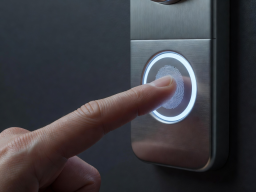
The concept of using unique biological traits for access control was once the exclusive domain of high-security commercial facilities and science fiction. Today, biometric fingerprint locks have become a highly accessible and increasingly common feature in residential settings. By eliminating the need for keys, codes, or even smartphones, biometrics offer arguably the most seamless entry experience available.
How Fingerprint Sensors Work
Understanding the underlying technology helps in setting realistic expectations for biometric lock performance. The residential market primarily utilizes two types of fingerprint scanners:
Optical Scanners
Older or more budget-friendly locks often use optical sensors. These operate somewhat like a digital camera; when you place your finger on the glass surface, LEDs illuminate the ridges and valleys of your fingerprint, and a sensor captures a high-contrast image. The software then compares this image against stored templates. While cost-effective, optical scanners can sometimes be bypassed by high-quality 2D printed images of a fingerprint and struggle with dirty or overly dry fingers.
Capacitive Scanners
The standard for modern, high-quality biometric locks is the 3D capacitive scanner, similar to the technology formerly used in smartphone home buttons. Instead of light, these sensors use an array of tiny electrical capacitors. The electrical charge varies depending on whether a fingerprint ridge (which touches the sensor) or a valley (which does not) is directly above it. This creates a detailed, three-dimensional electrical map of the finger. Capacitive scanners are inherently more secure because they require the conductivity of living tissue, making them highly resistant to artificial spoofs.
Accuracy Metrics: FAR and FRR
When evaluating biometric locks, the industry refers to two critical accuracy metrics:
- False Acceptance Rate (FAR): The probability that the system will incorrectly grant access to an unauthorized user. In modern capacitive residential locks, this rate is exceptionally low, often cited as less than 0.001%.
- False Rejection Rate (FRR): The probability that the system will fail to recognize an authorized user. This is a much more common real-world frustration. If your finger is wet, cold, cut, or calloused, the FRR increases. Most quality locks aim for an FRR below 2% under normal conditions.
To mitigate high FRR, best practices dictate registering the same finger multiple times at slightly different angles, and registering fingers from both hands.
Privacy and Data Storage
A common concern regarding biometric security is data privacy. Users rightfully question where their fingerprint data is stored. Reputable electronic lock manufacturers design their hardware so that biometric data is stored locally on an encrypted microchip within the lock itself. The fingerprint template is converted into mathematical algorithms, meaning a usable image of your fingerprint cannot be extracted or reconstructed even if the lock is physically compromised. This data is not uploaded to cloud servers, ensuring that your biometric markers remain under your physical control.
Multi-Modal Access Systems
Because biometric sensors can occasionally be thwarted by environmental factors—such as extreme rain or a user wearing gloves during winter—fingerprint scanning is rarely the sole method of entry. Most premium biometric locks are multi-modal, incorporating supplementary access methods.
A typical high-end unit will feature a fingerprint scanner built seamlessly into the lock housing, accompanied by a digital touchscreen keypad for PIN entry, and perhaps even a hidden traditional keyway for absolute fail-over. This redundancy ensures you are never locked out merely because your hands are dirty from gardening.
Conclusion
Biometric door locks represent the pinnacle of entry convenience. Returning home with groceries and unlocking the door with a split-second thumb press feels like a genuine upgrade to daily life. While they represent a higher initial investment and require clean sensors for optimal performance, the speed, security, and inherent personalization of capacitive fingerprint technology make it a compelling choice for the modern home.